N+2: política
Mostrando entradas con la etiqueta política. Mostrar todas las entradas

06 junio 2012

Noch Vesny - Vadim Kurchevsky (1976)


Noche de Primavera / A Spring Night
Ruso/Russian | Subs: Castellano, English (srt)

Noche de Primavera es un film poético hecho a partir de fragmentos del poema epónimo de Vladimir Lugovsky. El film está dedicado al tema de ser fiel a tradiciones de la guerra de la revolución (haciendo referencia a la construcción del comunismo en Rusia) y al tema de la felicidad mediante la lucha por la búsqueda de los altos ideales.


Film producido en los Estudios Soyuzmultfilm.


A spring night is a poetic film which is based on the motives of the poem by V. Lugovsky. The film is devoted to the theme of fidelity to the battle traditions of revolutionary past, to the theme of human happiness the sense of it in the battle for high ideals.


Subtítulos en Castellano por Qrosawa
English subs by Dust Angel (SMz)


LINKS

http://bitshare.com/?f=ofi3by14
http://bitshare.com/?f=iq617jw1

Password: www.nplus2.org

22 abril 2012

William Kentridge: Animated Shorts (1989-1999)


Cortos de Animación de William Kentridge (1989-1999)
Sin diálogos/No dialogue

Descripto como el "artista más celebrado en emerger en Sudáfrica en la era post-apartheid", los fuertes films de Kentridge -nacidos de las complejas realidades sociales e históricas de su tierra natal- exploran el paso del tiempo, las huellas que permanecen y la memoria que se suscita, es y se va cuando cerramos los ojos en el pasado.


William Kentridge nació en Johannesburgo en 1955. En 1976 se graduó en Política y Estudios Africanos por la Universidad de Witwatersrand. Posteriormente estudió en la Johannesburg Art Foundation, donde enseñó grabado dos años después.

Durante 1981 y 1982 estudió mimo y teatro en la École Jacques Lecoq de París. Ha trabajado en el teatro como actor, diseñador y director, y fue miembro fundador de la Junction Avenue Teatre Company.

En 1979 realiza su primera exposición individual en la Market Gallery de Johannesburgo, continuando con sus exposiciones de dibujo y grabado durante los años 80.

En los años ochenta trabajó como director de arte en películas y series para la televisión. En 1989 William Kentridge realizó su primer trabajo de animación con “Johannesburg 2nd Greatest City Alter Paris”, de la serieDrawings for projection. En esta obra emplea una técnica característica en su obra: dibujos realizados con carboncillo son implementados sucesivamente en la misma hoja, al contrario de la técnica tradicional, en la que cada movimiento se dibuja en una hoja separada. Así los vídeos y películas de Kentridge conservan las huellas de los dibujos realizados anteriormente.

Con la misma técnica, Kentridge realiza las animaciones Sobriety, obesity and growing old (1991), Félix in exile(1994), History of the main complaint (1996) y Stereoscope (1999). En 1999, realiza Shadow procession con recortes de papel negro sobre hojas de libros y mapas.

En 1992 organiza su primer proyecto teatral junto con la Handspring Puppet Company, Woyzeck on the Highveld. Combina los títeres y la animación, consiguiendo numerosos premios teatrales por su trabajo.

Expone en Documenta X, Kassel (1997); en la 24ª Bienal de São Paulo (1998); y en la Bienal de Venecia (1999). Realiza exposiciones individuales en Londres, Nueva York, Sidney y Johannesburgo.

William Kentridge vive y trabaja en Johannesburgo.


Films incluídos en esta recopilación:

Johannesburg, 2nd Greatest City after Paris (1989)
Monument (1990)
Mine (1991)
Sobriety, Obesity and Growing Old (1991)
Felix in Exile (1994)
History of the Main Complaint (1996)
Weighing.and Wanting (1997)


Felix in Exile (1994) fue elegido por ASIFA entre los 50 mejores cortos de animación de la historia.


William Kentridge, born in Johannesburg in 1955, is one of South Africa's most world renowned artists and animators. His father, Sydney Kentridge, was one of the defence team for Nelson Mandela at the notorious Rivonia Trial which resulted in Mandela’s 25 year imprisonment. As a result he grew up very aware of South African politics. After completing a degree in Politics and African Studies, he studied Fine Art and then Mime and Theatre at the L'École Internationale de Théâtre Jacques Lecoq in Paris. Between 1975 and 1991, he was acting and directing in Johannesburg's Junction Avenue Theatre Company. In the 1980s, he worked on television films and series as art director. 

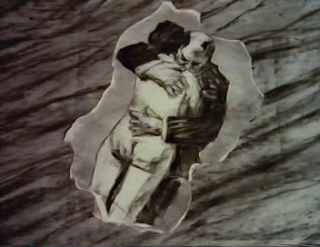
In 1989, Kentridge created his first animated work, Johannesburg, 2nd Greatest City After Paris, in the series Drawings for Projection. He first used here his charcoal animation technique that would become a feature of his work. What interests Kentridge is time; its passing, the traces it leaves, the memory that events, beings and objects leave when we close our eyes on our past. In order to do this, Kentridge gradually refined a personal and unique animation technique. Each of his short films is based on a series of some 20 to 40 charcoal drawings, one drawing per scene, mostly in large sizes with some colour enhancements in pastels. In a desire for a chromatic simplicity with symbolic values, only colors, such as blue to represent water, and red, are used, glaring against the subtlety of gray.

Each of these drawings is like a storyboard sketch, often filmed with no camera moves. Kentridge modifies his composition little by little between each frame shot by erasing certain parts and re-drawing them (similar to the oil paint on glass technique used by Alexander Petrov). The charcoal technique, ephemeral and volatile, lends itself to this treatment; particularly in that faint traces remain of the imagery that has been erased. The result on screen gives a rather fragile image, all in nuances, quite in the manner of a man obsessed by the idea of traces, of reminiscences. In this way, Kentridge's videos and films came to keep the traces of the previous drawings. His animations deal with political and social issues from a personal and at times autobiographical point of view, since the author includes his self-portrait in some of his works.

The political content and unique techniques of Kentridge's work have propelled him into the realm of South Africa's top artists. Working with what is in essence a very restrictive media, using only charcoal and a touch of blue or red pastel, he has created animations of astounding depth. A theme running through all of his work is his peculiar way of representing his birthplace. While he does not portray it as the militant or oppressive place that it was for black people, he does not emphasize the picturesque state of living that white people enjoyed during apartheid either; he presents instead a city in which the duality of man is exposed. In a series of nine short films, he introduces two characters, namely Soho Eckstein and Felix Teitlebaum. These characters depict an emotional and political struggle that ultimately reflects the lives of many South Africans in the pre-democracy era.

In an introductory note to Felix In Exile, Kentridge writes, "In the same way that there is a human act of dismembering the past there is a natural process in the terrain through erosion, growth, dilapidation that also seeks to blot out events. In South Africa this process has other dimensions. The very term 'new South Africa' has within it the idea of a painting over the old, the natural process of dismembering, the naturalization of things new." 

Films included in this compilation are:
1. Johannesburg, Second Greatest City After Paris (1989)
2. Monument (1990)
3. Mine (1991)
4. Sobriety, Obesity And Growing Old (1991)
5. Felix In Exile (1994)
6. History Of The Main Complaint (1996)
7. Weighting And Wanting (1998)
8. Stereoscope (1999)
sarienne (Surreal Moviez)


Links


https://rapidshare.com/files/123088511/WK_-_AnimShorts.part1.rar
https://rapidshare.com/files/1127625399/WK_-_AnimShorts.part2.rar
https://rapidshare.com/files/1267119962/WK_-_AnimShorts.part3.rar
https://rapidshare.com/files/1054303542/WK_-_AnimShorts.part4.rar
https://rapidshare.com/files/3503494434/WK_-_AnimShorts.part5.rar
https://rapidshare.com/files/1557603169/WK_-_AnimShorts.part6.rar

18 abril 2012

Sovietskie igrushki - Dziga Vertov (1924)


Советские игрушки / Juguetes Soviéticos / Soviet Toys
Silente / Silent

"Considerada como la primera película de animación soviética, “Juguetes soviéticos” fue hecha por el aclamado director de cine documental Dziga Vertov. Se basa en caricaturas políticas de V. Deni que apareció en el periódico “Pravda”. Los rusos se refieren a los adornos en los árboles de Año Nuevo como “juguetes”. Después de la Revolución y la Guerra Civil, Rusia estaba en la ruina financiera. Para reactivar la economía, Lenin presentó la nueva política económica, una forma de capitalismo limitado. El “NEP” revivió con éxito la economía, pero no había mucho resentimiento para los fieles del partido de la NEP, hombres que se hicieron ricos y vivían lujosamente. Vertov hizo esta película para anunciar las capacidades de producción de la nueva agencia de publicidad y cine Goskino, para quien había ido sólo para el trabajo."

Este es el primer film animado soviético del que se tiene data, realizado por el gran documentalista de vanguardia, el polaco Denís Abrámovich Káufman, más conocido por su nombre artístico Dziga Vertov. Sin duda una obra infaltable en toda colección.


"Denís Abrámovich Káufman nació en 1896 en el seno de una familia judía en Bialystok, ciudad perteneciente en aquellos años a la Rusia zarista. En su juventud, rusificó su patronímico, convirtiéndolo en Arkádievich. Estudió música en el conservatorio de Bialystok hasta que su familia, huyendo del avance del ejército alemán durante la I Guerra Mundial, se trasladó a Moscú en 1915. Poco después, se instalaron en San Petersburgo, donde Kaufman inició la carrera de Medicina y comenzó a escribir, tanto poesía como narraciones satíricas y de ciencia ficción.
Interesado por el futurismo, adoptó el seudónimo de Dziga Vértov, que significa algo así como "gira, peonza" en ucraniano. En 1918, tras la revolución, el Comité del Cine de Moscú lo contrató para trabajar en Kino-Nedelia ("Cine-Semana", semanario cinematográfico de noticias de actualidad soviético), en Moscú. Trabajó montando noticiarios cinematográficos durante tres años. Entre sus compañeros estaban Lev Kuleshov, que por aquellos años estaba llevando a cabo sus famosos experimentos de montaje, y Edouard Tissé, futuro cámara de Eisenstein.
Su primera película como director fue El aniversario de la Revolución (1919), seguida de La batalla de Tsaritsyn (1920), El tren Lenin (1921) e Historia de la guerra civil (1922). En estas películas, Vértov exploró las posibilidades del montaje, ensamblando fragmentos de película sin tener en cuenta su continuidad formal, temporal ni lógica, buscando sobre todo un efecto poético que pudiera impactar a los espectadores.
En 1919, Vértov y otros jóvenes cineastas, entre los que se encontraba su futura esposa Elizaveta Svílova, crearon un grupo llamado Kinoki (Cine-Ojo). Más tarde se les uniría también el hermano de Vértov, Mijaíl Kaufman. Entre 1922 y 1923, Vértov y Svílova publicaron varios manifiestos en publicaciones de vanguardia, desarrollando su teoría del Cine-Ojo. Vértov y los otros miembros del grupo rechazan de plano todos los elementos del cine convencional: desde la escritura previa de un guion hasta la utilización de actores profesionales, pasando por el rodaje en estudios, los decorados, la iluminación, etc. Su objetivo era captar la "verdad" cinematográfica, montando fragmentos de actualidad de forma que permitieran conocer una verdad más profunda que no puede ser percibida por el ojo. Según el propio Vértov, "fragmentos de energía real que, mediante el arte del montaje, se van acumulando hasta formar un todo global", permitiendo "ver y mostrar el mundo desde el punto de vista de la revolución proletaria mundial".
En 1922, Vértov comenzó la serie de noticiarios Kino-Pravda (Cine-Verdad). En la serie Kino-Pravda, Vértov filmó todo tipo de lugares públicos, en ocasiones con cámara oculta y sin pedir permiso. El más famoso noticiario fue Léninskaya Kino-Pravda, que mostraba la reacción a la muerte de Lenin en 1924. Durante los años 20 rodó varias películas, pero destaca sobre todo El hombre de la cámara (Chelovek s Kinoapparátom, 1929).
El hombre de la cámara muestra un día en la vida de un operador soviético, dedicado a filmar una ciudad soviética desde el amanecer hasta la noche. Se ha relacionado con una modalidad de documentales urbanos que tuvo éxito en la época, las "sinfonías de grandes ciudades", ejemplificadas por películas como Berlín, sinfonía de una gran ciudad (1927), de Walter Ruttmann, o Lluvia (1929) de Joris Ivens. Lo que distingue a la obra de Vértov de las citadas es la voluntad de realizar un análisis marxista de las relaciones sociales mediante el montaje. Además, El hombre de la cámara pone el acento en el proceso de producción y consumo del cine (rodaje, montaje y contemplación).
Tras su última obra de libreria, Tres cantos a Lenin (Tri pesni o Lénine, 1934), Vértov fue relegado por el sistema estalinista a la producción de noticieros convencionales."


"In 1924 he directed one of the earliest Soviet animation Soviet Toys. Like many works of Vertov, this animation short is a heavily propagandistic piece of art aimed at NEPman, a member of a new wealthy social class of the 1920s. NEP (New Economic Policy) was born in the result of the temporary liberalization of the Soviet economy in the 1920s. This cartoon also aims at the Russian Orthodox Church that was suppressed during the 1920s-1930s particularly harshly although a caricature depiction of the fat corrupt priest was not atypical even for the pre-revolutionary Russia. The other priest is a satirical representation of the so-called Living Church (обновленцы) that was established in 1922 during the schism within the Orthodox church.
NEP helped to recover post-Civil War Russia, but was often criticized as a return of the capitalist past particularly by the left-wing activists and avant-garde artists like Vertov who promoted building of the new Communist society. NEP lasted for less than a decade, until Stalin became an ultimate Soviet leader in 1928. Vertov rather accurately predicted the decline of NEP: after the worker and peasant (literally) unite they manage to crush NEPman and take all his money.


Soviet toys ends with the scene of the Christmas tree composed of the Red Army soldiers who literally hang fat NEPman, his girlfriend, both priest, and the worker and peasant climb to the top of the new social order.

As Lenin stated, the capitalist will sell us rope with which we will hang them.  After NEP helped to recover the state of economy, it was prohibited and private entrepreneurs were forced to close their businesses.
Vertov was interested in exploring various media and employed animation technique in some of his documentaries, including stop motion sequence in his famous Man with a Movie Camera (Человек с киноаппаратом), 1929. Though roughly made, Soviet Toys is one of the important artifacts of the dawn of the Soviet animation."

LINKS

https://rapidshare.com/files/2252035616/1924SovietskieIgrushki.D.Vertov.www.nplus2.org.part1.rar
https://rapidshare.com/files/1419755856/1924SovietskieIgrushki.D.Vertov.www.nplus2.org.part2.rar

17 abril 2012

Fotel - Daniel Szczechura (1963)


Butaca / Armchair
Sin Diálogos / No Dialogue

En el Congreso de Varsovia se lleva a cabo una importante reunión a la que acude bastante gente. En la mesa de los dirigentes, de pronto, sobra una silla, quedando así una vacante por la que todo el mundo empezará a pelear, obstaculizándose entre todos para impedir que el otro llegue a la silla del poder.


Un film que pone en evidencia los juegos, artimañas y las relaciones de poder que existe entre la masa y sus dirigentes, cual máquina y engranajes; Simbolizando, en este caso, el poder en una silla vacía a la que absolutamnente todos quieren acceder, sin importar el grado de perjuicio que implique este ascenso en el otro. 


Elaborado mediante recortes, o cut-out, esta obra fue ganadora de los siguientes premios y festivales:
Warsaw Mermaid, Nagroda Klubu Krytyki Filmowej SDP, Award of the Film Critics Club of the Association of Polish Journalists for 1963; 10th Oberhausen International Short Film Festival, Grand Prix for an Animated Film and honorable mention and distinction of the jury of the Association of People's Universities; 1st International Short Film Festival (ISFF), Kraków, Grand Prix; 4th Buenos Aires International Short Film Festival, honorable mention, todos en 1964 y 6th International Festival of Documentary and Experimental Films, Montevideo, Grand Prix, este último en 1965.


"The story of a power struggle. In a grand hall reminiscent of Warsaw's Congress Hall, a gathering takes place - perhaps of the Polish United Workers' Party. One seat at the chairman's table is vacant and everyone gathered in the hall attempts to get to it, using all manner of trickery, including tripping up their competitors. When a figure finally succeeds in getting to the seat and occupying it, the struggle ends and all those gathered applaud. A satire on the Polish People's Republic, told in a manner that is graphically clear, with the figures shown from above resembling wheels in a machine. "This is practically a representation of the mathematical formula for an electoral gathering - merciless in its ironic comedy" (A. Kossakowski, "Polski film..." / "Polish Animated..."). "A humorous and wise story about careerism, accurate in its telling, modern in its abbreviated draftsmanship that is simplified to the maximum degree possible" (Aleksander Jackiewicz, "Życie Literackie" / "Literary Life" monthly, 24/1964)."


"Daniel Szczechura (born 1930) - director of animated films. Graduated from Warsaw University in the History of Art, and later studied in the film operators' faculty department of the PWSTiF Łódź Film School. His films have won awards at the film festivals in Oberhausen, Montevideo, Buenos Aires, Cordoba, Paris, Philadelphia and Melbourne. The films which have already entered the history of animated films include 'The Chair' (1964), 'The Diagram' (1966), 'Hobby' (1968), 'The Ant's Journey' (1970), 'Burning Fingers' (1976), and 'Jump' (1978). In 2008 he received the Medal for Merit to Culture "Gloria Artis"."


LINK

https://rapidshare.com/files/3449600049/1963TheArmchair.D.Szczechura.www.nplus2.org.avi

11 abril 2012

Monsieur Cok - Franck Dion (2009)


Señor Cok / Mister Cok
Sin Diálogos / No Dialogue

El Señor Cok, un anciano con forma de misil, es un megamagnate de la industria armamentística y fiel representante del mundano espíritu del capitalismo. Convencido de la eficiencia de la máquina sobre la mano de obra humana, el señor Cok decide reemplazar a sus obreros por humaniodes mecanizados; Sin embargo el espíritu obrero (representado por un enérgico trabajador parecido a Marx) aparentemente pasivo, tiende a la inconformidad, aunque tal desición quimérica lo conduzca a la autodestrucción. 


Una obra visualmente muy bien lograda, cuyo dicurso fusiona, mediante su estética retro-futurista, los elementos del comunismo marxista de principios del S. XX (opresión del proletariado, el naciente maquinismo o diferencias de clase) con las modernas relaciones de poder (asociaciones entre las grandes corporaciones de la industria armamentística con instituciones políticas o religiosas). 


Esta es la segundo obra de Dion, siendo L'inventaire fantôme la primera, ambas premiadas como se merecen. El film fue elaborado a partir de diferentes técnicas, como ser cut-out, fotografías de muñecos, gráficos en 2D,  y retoques por ordenador.


Mister Cok is the owner of a large bomb factory. Looking for efficiency and profit, he decides to replace his workers by sophisticated robots; however one of the workers does not accept being discarded so easily.
(IMDb)


"which Franck Dion created the drawings, the sets and sculptures that the movie needed. The movie was animated at the Studio Train-Train, in Lille, North of France. Technically, Mister COK uses the conventions of paper cut-out, with numerical 2D graphics and puppets photographs. Miniatures, built with the help of Zoé Goetgheluck, were used for many sets. Compositing and additional animations were done in Paris. Mister COK is the first movie produced by Papy3D, a new production company founded by a team of animation directors."


 LINK

https://rapidshare.com/files/1690797340/2009MonsieurCok.F.Dion.www.nplus2.org.mp4